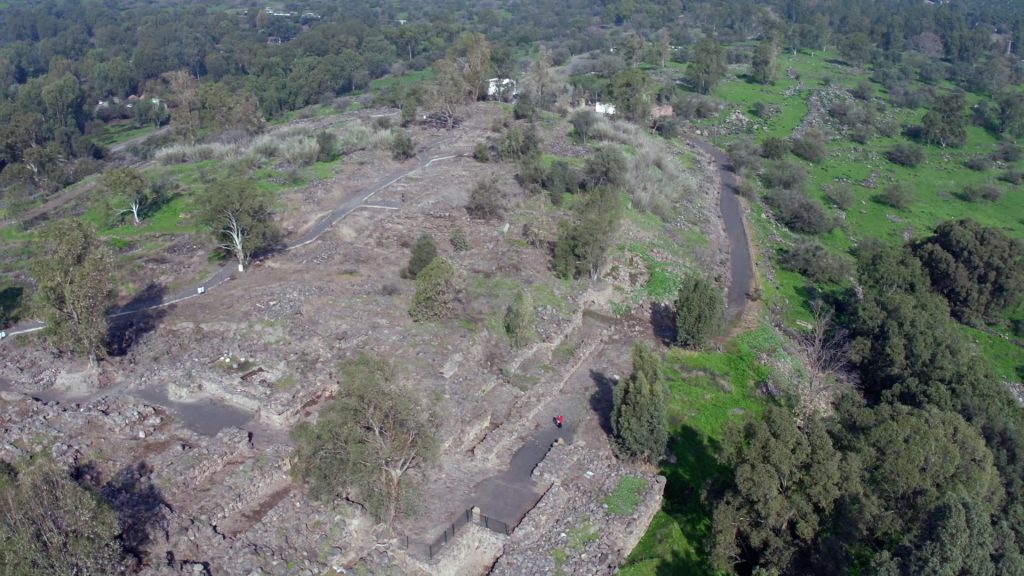
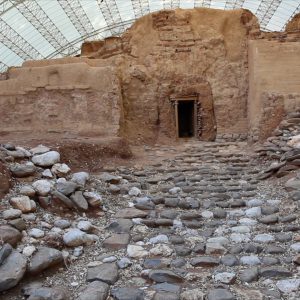
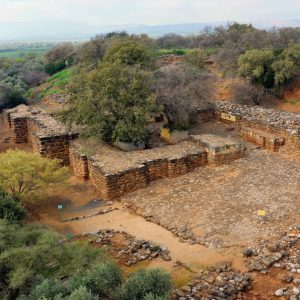
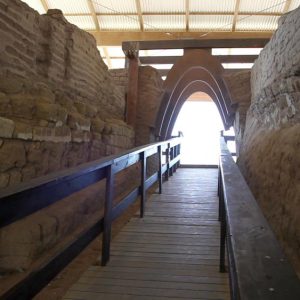
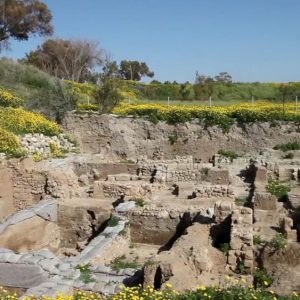
The city was founded in the tenth century BCE and was apparently destroyed in 734 BCE, by the Assyrian, Tiglath-pileser III and was later revived in the Hellenistic period (332-37 BCE). It was during the first century CE that Jesus’ ministry was apparently in this area.
It was the birthplace of the apostles, a village frequented by Jesus (and also cursed by him) – there is literally no other example of an entire biblical era city, intact – anywhere. And it took 17 centuries to definitively establish the exact location of this Iron Age city of Bethsaida.
According to John 1:44, Bethsaida was the hometown of the apostles Peter, Andrew, and Philip. In the Gospel of Mark (Mark 8:22–26), Jesus reportedly restored a blind man’s sight at a place just outside the ancient village of Bethsaida. In Luke 9:10–11, Jesus miraculously feeds five thousandnear Bethsaida.
Pliny the Elder, in his Natural History, places Bethsaida on the eastern side of the Sea of Galilee. The historian Josephus says that the town of Bethsaida (at that time called Julia), was situated 120 stadia from the lake Semechonitis, not far from the Jordan River as it passes into the middle of the Sea of Galilee. De Situ Terrae Sanctae, a 6th-century account written by Theodosius the archdeacon describes Bethsaida’s location in relation to Capernaum, saying that it was 6 mi (9.7 km) distant from Capernaum. The distance between Bethsaida and Paneas is said to have been 50 mi (80 km).