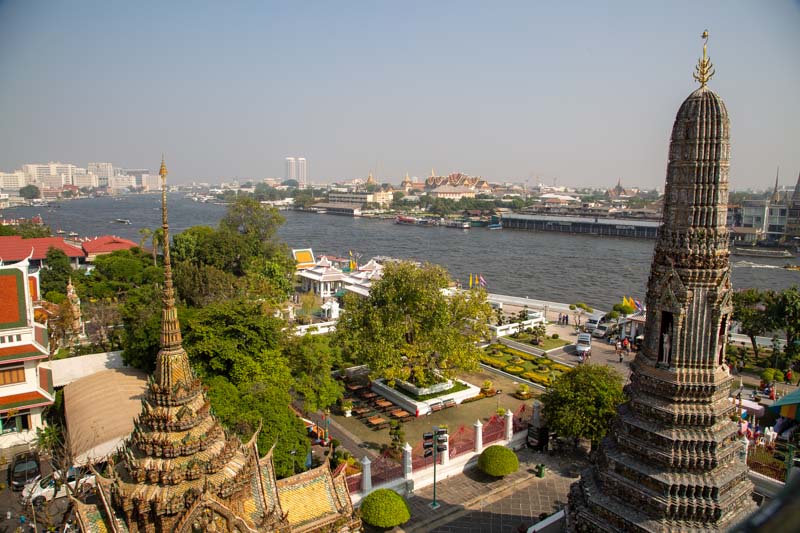
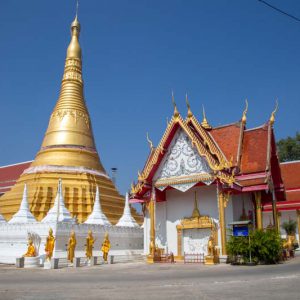
Wat Arun Ratchawararam Ratchawaramahawihan or Wat Arun is a Buddhist temple in Bangkok Yai district of Bangkok, on the Thonburi west bank of the Chao Phraya River. The temple derives its name from the Hindu god Aruṇa, often personified as the radiations of the rising sun.
A Buddhist temple had existed at the site of Wat Arun since the time of the Ayutthaya Kingdom. It was then known as Wat Makok, after the village of Bang Makok in which it was built. According to the historian Prince Damrong Rajanubhab, the temple was shown in French maps during the reign of Narai (1656–88). The temple was renamed Wat Chaeng by Taksin (1767–82) when he established his new capital of Thonburi near the temple, following the fall of Ayutthaya. It is believed that Taksin vowed to restore the temple after passing it at dawn. The temple enshrined the Emerald Buddha image before it was transferred to Wat Phra Kaew on the river’s eastern bank in 1784. The temple was on the grounds of the royal palace during Taksin’s reign, before his successor, Rama I (1782–1809), moved the palace to the other side of the river. It was abandoned until the reign of Rama II (1809–24), who had the temple restored and had begun plans to raise the main pagoda to 70 m.[2] The work on the pagoda commenced during the reign of Rama III (1824–51). The main prang was completed in 1851, after nine years of continued construction.