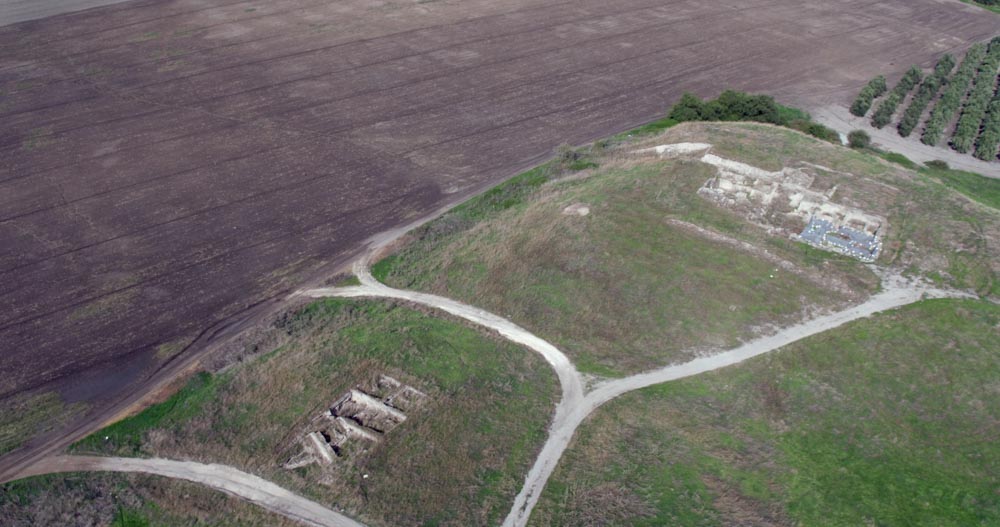
Remains of a mainly Byzantine-period synagogue built in three successive phases between the fourth and the seventh century CE were found at the site of Tulul Farwana (“mounds of Farwana”), now part of the agricultural lands of Kibbutz Ein HaNetziv. Among the remains of the synagogue archaeologists found a relatively well-preserved mosaic pavement, the narthex part of which includes a very long sixth-century inscription in Aramaic; the so-called Mosaic of Rehob, Tel Rehov inscription or Baraita of the Boundaries with details of Jewish religious laws concerning “the Borders of the Land of Israel” (Baraitha di-Tehumin), tithesand the Sabbatical Year. During an archaeological survey of the abandoned structures standing at Farwana, there was found a marble-parapet with a relief of a seven-branched menorah, believed to have once enclosed the raised rostrum of the synagogue. Today, the marble-parapet with its menorah relief is on display at the synagogue in Kibbutz Ein HaNetziv. Later, children from the kibbutz discovered nearby one of the abandoned structures a cache of gold coins, which discovery prompted a more thorough investigation of the site, under the tutelage of archaeologist Fanny Vitto. An excavation of the site by her team led to the discovery of the aforementioned mosaic.