The Kingdom of Jerusalem built fortresses along the road to Jerusalem in order to control the traffic to Jerusalem, and protect pilgrims visiting the Holy City. Farms were built using the spring water for irrigation.
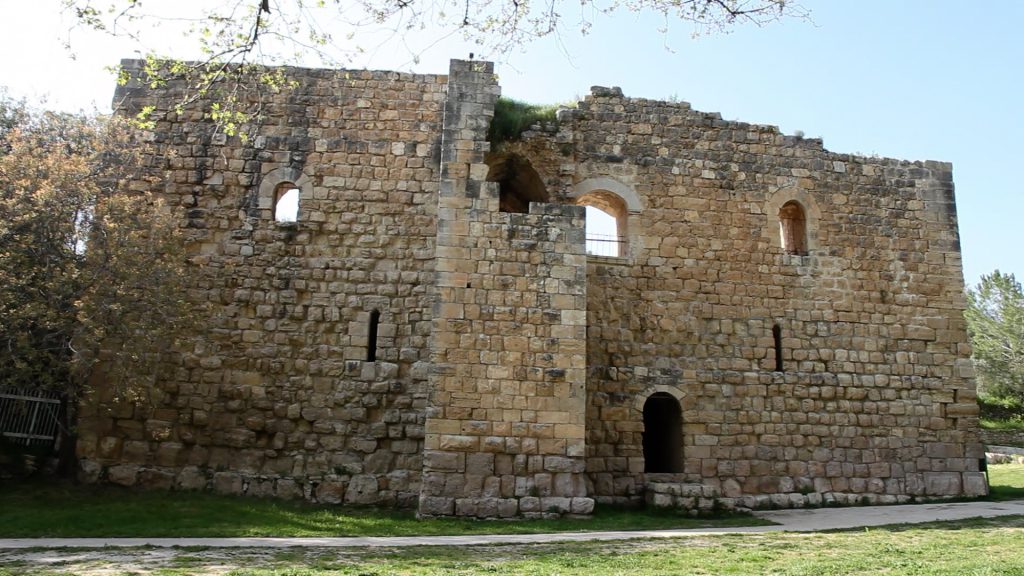
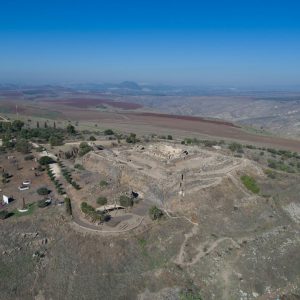
Impressive ruins of a 30×40 metre Crusader courtyard building, whose southern wall survives to a height of 12 metres, are located on the north site of the riverbed. The building has several gates and two arched halls. Archaeological investigations indicate that it was built in 1140-1160, during the reign of Fulk of Jerusalem, in the same period as the fortresses on Tzova and Abu Ghosh. South of the building are a nature reserve and a Muslim cemetery.