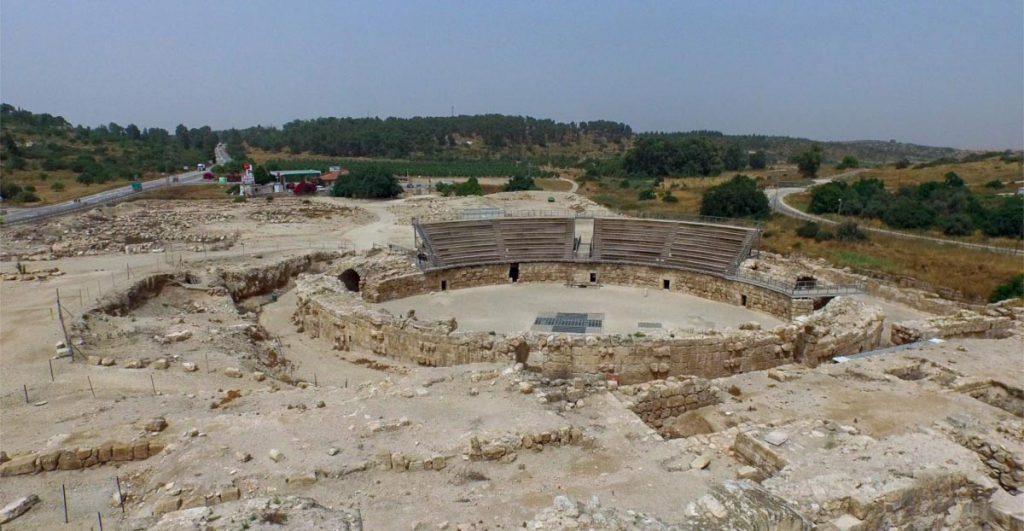
Eleutheropolis, was a Roman and Byzantine city in Israel, some 53 km southwest of Jerusalem. Its remains still straddle the ancient road connecting Jerusalem to Gaza.
In the year 200, Roman Emperor Septimius Severus gave it the status of a city under a new Greek name, Eleutheropolis, meaning “City of the Free”, and its inhabitants were given the ius italicum. Coins minted by Septimius Severus bear the date January 1, 200, commemorating its founding and the title of polis.
Eleutheropolis became one of the most important cities in the Roman province of Syria Palaestina. The city was then inhabited by Jews, Christians and pagans. Seven routes met at Eleutheropolis, and Eusebius, in his Onomasticon, uses the Roman milestones indicating the city as a central point from which the distances of other towns were measured. Eleutheropolis was a “City of Excellence” in the fourth century and a Christian bishopric with the largest territory in Palaestina: its first known bishop is Macrinus, who attended the Council of Nicaea in 325.