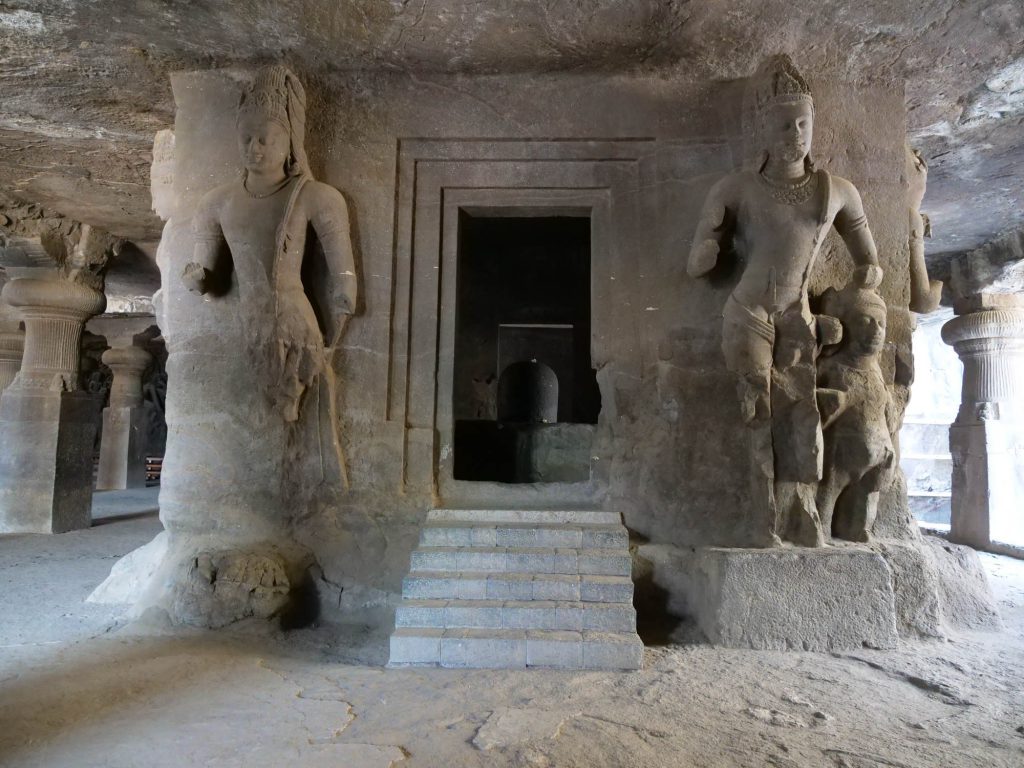
The rock-cut Elephanta Caves were constructed about the mid-5th to 6th centuries AD. The most important among the caves is the great Cave 1, which measures 39 metres from the front entrance to the back.
The Elephanta Caves contain rock cut stone sculptures, mostly in high relief, that show syncretism of Hindu and Buddhist ideas and iconography. The caves are hewn from solid basalt rock. Except for a few exceptions, much of the artwork is defaced and damaged. The main temple’s orientation as well as the relative location of other temples are placed in a mandala pattern. The carvings narrate Hindu mythologies, with the large monolithic 5.45 metres Trimurti Sadashiva (three-faced Shiva), Nataraja (Lord of dance) and Yogishvara (Lord of Yoga) being the most celebrated.
The main cave, also called Cave 1, Grand Cave or the Great Cave, is 39.63 metres square in plan with a hall (mandapa). The basic plan of the cave can be traced back to the plan of the ancient Buddhist viharas, consisting of a square court surrounded by cells, built from about 500 to 600 years before in India. The Cave has several entrances, the main entrance is unassumingly small and hides the grand hall inside. The main entrance faces north, while two side entrances face east and west. The cave’s main entrance is aligned with the north–south axis, unusual for a Shiva shrine (normally east–west). However, inside is an integrated square plan Linga shrine (garbha-griya) that is aligned east–west, opening to the sunrise.