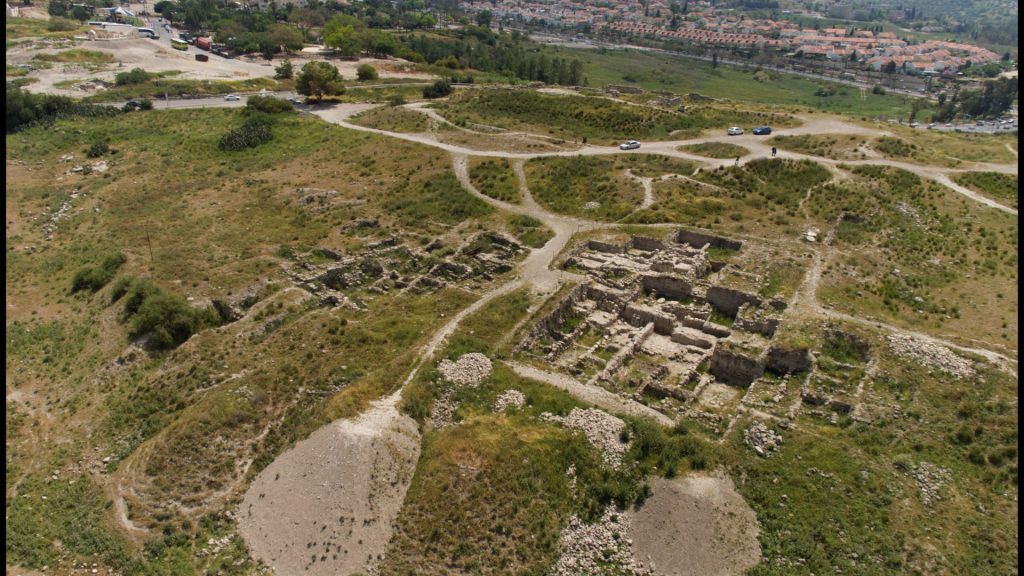
The Canaanites of Beit Shemesh named the city after Shapash/Shemesh, the sun-goddess they worshipped. The ruins of the ancient biblical city of the Canaanites and Israelites are located at a site called Tel Beit Shemesh in Modern Hebrew and Tell er-Rumeileh in Arabic, a tell (archaeological mound) situated immediately west of modern Beit Shemesh, and Moshav Yish’i, right on the west side of Highway 38. The earliest mention of Beit Shemesh is found in Egyptian execration texts, dating several hundred years earlier than its mention in Hebrew canonical books.
After the destruction of much of Judah by Sennacherib in 701 BCE, the city was abandoned for a while, but there seems to have been an attempt by a group of Judahites at resettling Beth Shemesh, judging by the refurbishing of the water reservoir in the 7th century BCE. However, after the Babylonian conquest of Judah in the early 580s, either the new Babylonian rulers, or the nearby Philistine metropolis of Ekron favoured by them, apparently put an end to the initiative by sealing and covering over the vital water reservoir, which was not uncovered until 2004.